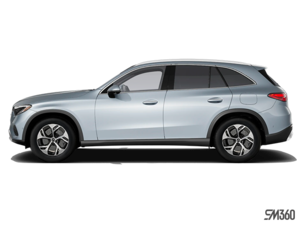

Is the 2026 Mercedes-Benz GLC 350e 4MATIC SUV the GLC Family's Best Daily-Drive Electrified Option?
June 11 2026,
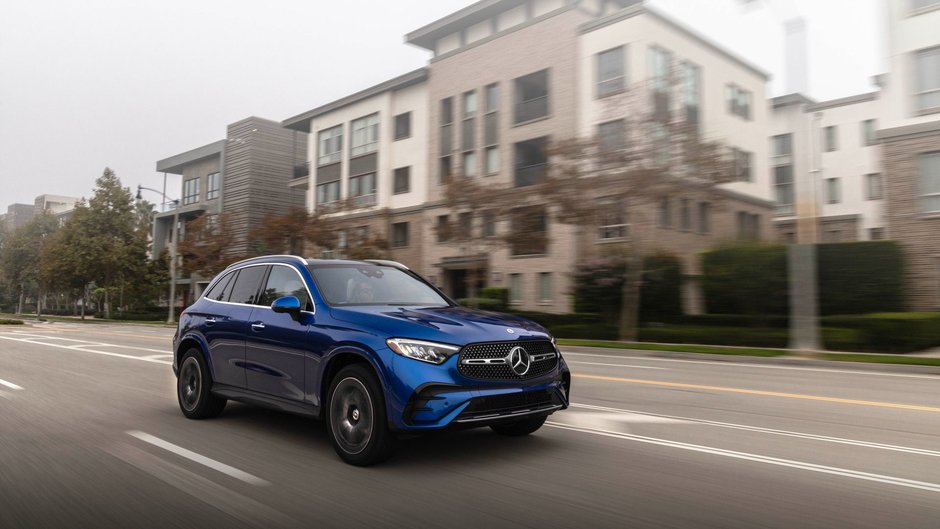
The GLC lineup offers buyers two ways to run on electricity: the GLC 300 4MATIC's 48-volt mild hybrid system, which recovers energy but cannot drive on battery power alone, and the GLC 350e 4MATIC's full plug-in hybrid architecture, which can cover up to 87 km on battery power without touching the gasoline engine. For anyone who does most of their driving within a predictable daily range, that distinction changes how the vehicle functions every single day.
This article lays out what the GLC 350e 4MATIC delivers as a daily driver: how the powertrain works, what the charging setup looks like in practice, and where it sits in the GLC family's broader lineup.
How the Plug-In Hybrid System Works
The GLC 350e 4MATIC pairs a turbocharged 2.0L inline-four with a 134-hp electric motor and a 24.8 kWh battery. Combined system output is 313 hp and 406 lb-ft of torque, with 0-100 km/h arriving in 6.7 seconds. The 9G-TRONIC nine-speed automatic manages power delivery across both sources, and 4MATIC all-wheel drive is standard throughout.
Three drive modes handle different priorities. Electric mode keeps the vehicle running on battery power alone, covering everyday distances without the combustion engine starting at all. Hybrid mode coordinates both the engine and the electric motor, with the vehicle intelligently prioritising electric propulsion during low-demand situations such as city traffic and slow-speed stretches. Charge mode uses the combustion engine to replenish the battery while the vehicle is in motion, which is useful for arriving at a destination with more stored energy ready for a return trip.
A haptic accelerator pedal gives the driver physical feedback when pressing past the most energy-efficient threshold, making it easier to stay within electric operation without actively monitoring a display.
87 km of Electric Range in a Daily Context
At 87 km of all-electric range, the GLC 350e covers a full round-trip daily commute of up to 43 km each way, and many shorter daily errand combinations, entirely on battery power. When a trip runs longer than the battery allows, the combustion engine takes over without any action from the driver.
City fuel economy in hybrid mode is rated at 3.7 Le/100 km, which reflects how much electricity the vehicle uses when operating partially or fully on battery power. For buyers who can charge regularly, either at home or at a workplace charger, this figure is the more relevant number for day-to-day running costs.
The GLC 300 4MATIC's mild hybrid system, by contrast, cannot drive on battery power alone. Its 48-volt Integrated Starter-Generator adds up to 20 hp electrically for acceleration support and supports gas-free coasting, but the combustion engine is always part of the equation. Buyers who want to make a meaningful portion of their weekly driving fully electric need the 350e.
Charging: AC and Optional DC Fast Charging
The standard charging port accepts up to 9.6 kW on a Level 2 AC charger, bringing the battery from 10 to 100 percent in approximately 2.75 hours. That covers an overnight charge on a home wallbox or a workplace Level 2 station.
The optional 60 kW DC fast charging adds a faster option for mid-day stops. At 60 kW, the battery goes from 10 to 80 percent in approximately 30 minutes. For a buyer who parks near a public DC charger during the day, a brief stop adds back the better part of a full charge. DC charging capability at this speed is not common across plug-in hybrid SUVs in this segment.
- 9.6 kW AC: 10-100% in approximately 2.75 hours
- 60 kW DC (optional): 10-80% in approximately 30 minutes
- J1772 AC connector / CCS DC connector
All-Season Capability with Self-Leveling Rear Suspension

4MATIC all-wheel drive is standard on the GLC 350e, not an upgrade. The system continuously adjusts torque distribution between front and rear axles, reacting to road conditions and available grip at each wheel. For buyers who face variable weather and road surfaces, this keeps the vehicle composed without any manual input.
The GLC 350e also carries a self-leveling rear air suspension as standard equipment, which the GLC 300 4MATIC does not. This system maintains consistent ride height regardless of cargo weight or passenger load, keeping the vehicle's handling balance consistent whether the rear seats are empty or occupied.
Interior and Cargo
The GLC 350e shares the GLC family's five-passenger interior with standard third-generation MBUX, a 12.3-inch digital instrument cluster, and an 11.9-inch central touchscreen. Wireless Apple CarPlay and Android Auto, KEYLESS-GO, KEYLESS-START, power front seats with memory, heated front seats, and 64-colour LED ambient lighting are all standard.
MBUX includes EQ-specific displays showing battery charge state, energy flow between motor and battery, and available regeneration. Navigation with Electric Intelligence plans routes with awareness of the current battery level and nearby charging locations.
Cargo capacity is 470 L with seats up and 1,530 L fully folded. The battery packaging does reduce cargo volume modestly compared to the GLC 300 4MATIC's 620 L to 1,680 L, which is worth factoring in for buyers who regularly carry large loads.
At a Glance: GLC 350e 4MATIC vs GLC 300 4MATIC
|
Specification |
GLC 350e 4MATIC |
GLC 300 4MATIC |
|---|---|---|
|
System output |
313 hp combined |
255 hp |
|
Torque |
406 lb-ft |
295 lb-ft |
|
Electric driving |
Up to 87 km |
None |
|
Hybrid fuel economy |
3.7 Le/100 km (city) |
10.0 L/100 km (city) |
|
Rear suspension |
Self-leveling air |
Selective damping |
|
Cargo (seats up) |
470 L |
620 L |
|
Cargo (folded) |
1,530 L |
1,680 L |
|
DC fast charging |
60 kW (optional) |
Not applicable |
Find Out More at Mercedes-Benz St. John's
For buyers who prioritise daily electric driving flexibility, the GLC 350e 4MATIC is the stronger answer within the GLC family. The team at Mercedes-Benz St. John's can walk you through both the 350e and 300 4MATIC configurations, help you assess which charging setup fits your situation, and answer any questions about how the plug-in hybrid system works in everyday use. Contact the team or stop in to get the full picture.